Importing Doors and Windows to Nigeria: The Certification Gate
Nigeria checks regulated imports before they ship, not after they land. What that means for a doors and windows order, and what it costs to get the sequence wrong.
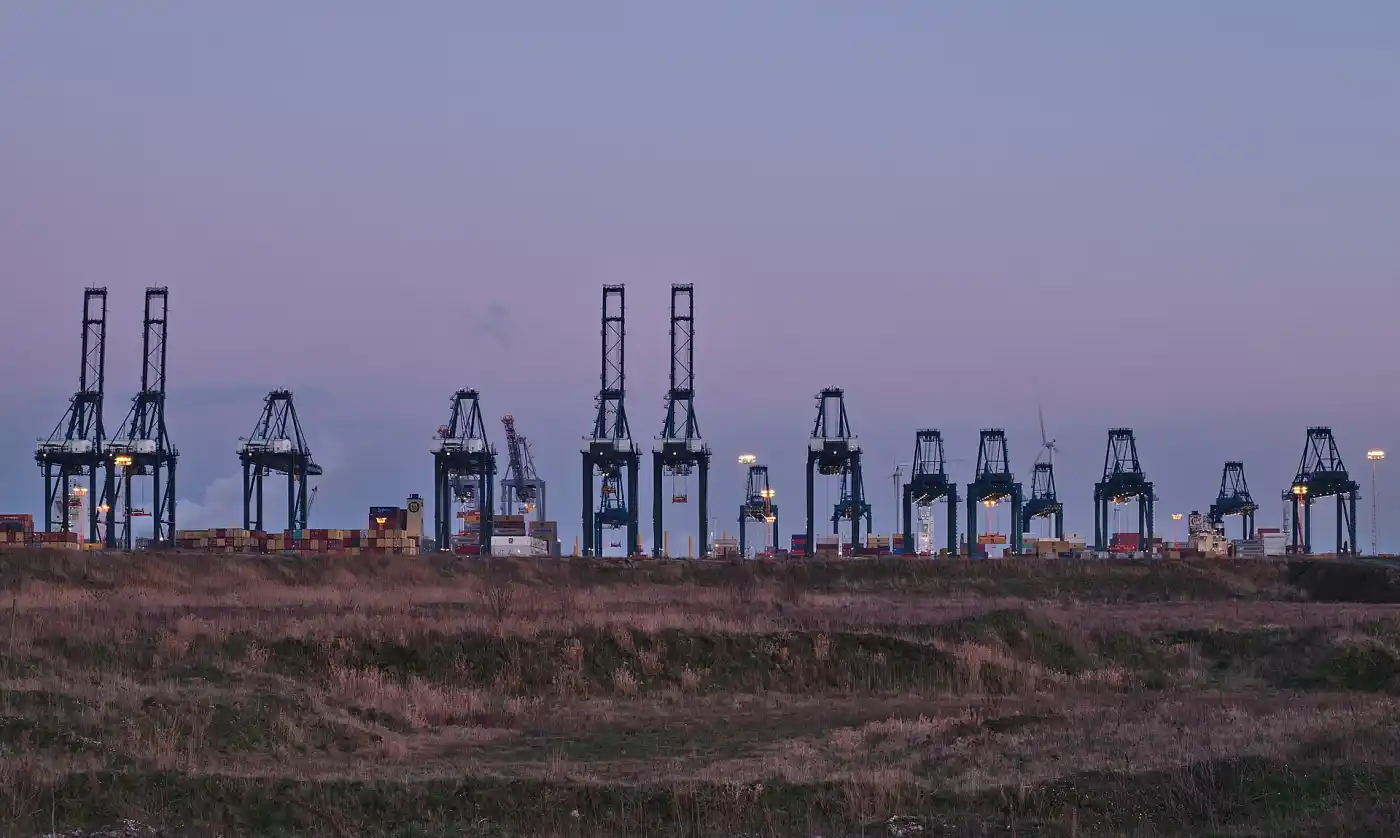
- What actually stops a container of windows at a Nigerian port?
- SONCAP is an offshore scheme, and that changes everything
- The two certificates, and what each one unlocks
- Which route suits a distributor placing repeat orders
- What it costs to get this wrong
- What the factory has to produce before a certificate exists
- The specification decisions that decide whether you pass
- The order of operations most first-time importers get wrong
- What a sourcing partner should carry, and what stays yours
- Where we will say no
- Questions buyers ask
- Send us your specification
The container is not stopped by the windows. It is stopped by a certificate that had to exist before the windows were loaded — and by then it is too late to fix.
In simple words
Nigeria checks many imported goods before they are shipped, not after they arrive.
Doors, windows and their hardware fall into that checked group.
You need two papers: one that says the product is fine, and one that lets the shipment clear the port.
Both are arranged in the country the goods come from, while the goods are still there.
If you ship first and ask later, there is a penalty, and the goods can be held, tested or destroyed at your cost.
What actually stops a container of windows at a Nigerian port?
Not the product quality. The missing paperwork. Nigeria runs a pre-shipment conformity scheme called SONCAP. Regulated goods must be certified in the country of supply, before loading. A container that arrives without the certificate is a documentation failure, and no amount of test evidence produced afterwards converts it back into a compliant shipment.
This is the part that catches distributors who are new to the market, and it catches them precisely because they are careful buyers. They choose a good factory, they specify properly, they even pay for third-party inspection. Then the goods land and the shipment is detained, because the one thing that had to happen in India or China or Turkey — certification at origin — was treated as an arrival formality.
The Standards Organisation of Nigeria describes SONCAP plainly as “an offshore and pre-shipment certification scheme to monitor, check and control the importation of regulated products into Nigeria.” Every word in that sentence is doing work. Offshore means outside Nigeria. Pre-shipment means before the vessel sails. Regulated products means a defined list, and building products sit inside it. If you remember one thing from this page, make it that sequence: certify, then load, then ship. Reversed, it is expensive.
SONCAP is an offshore scheme, and that changes everything
Most import compliance a distributor has met before is destination-side: you land the goods, customs inspects, you pay duty, you take delivery. An offshore scheme inverts that. The inspection body, appointed to act for Nigeria, does its work at the point of supply. Its output is a certificate that travels with the shipment rather than being created by it.
Two practical consequences follow, and both change how you plan an order.
First, your supplier becomes part of your compliance chain whether they want to be or not. The test reports, the factory information and the production consistency evidence come from the manufacturer. A factory that has never exported to Nigeria may not have any of it in a usable form, and may not understand why you are asking. That conversation belongs in the quotation stage, not the week before shipment.
Second, certification takes calendar time you must build into the lead time. SON states that Product Certificates are issued in 96 hours as standard, and in 24 hours where documents are submitted promptly and the products comply — with the same figures for SONCAP Certificates. Those are processing windows, not project timelines. The testing and document assembly that precedes them is the part that actually takes weeks, particularly on a first order from a factory that has to test to a standard it has not used before.
The two certificates, and what each one unlocks
There are two documents, they are not interchangeable, and each one unlocks a different door.
| Document | What it says | What it unlocks |
|---|---|---|
| Product Certificate (PC) | That the product conforms to the applicable quality requirements. Issued during the certification process. | Per SON, it enables the opening of the CBN Form M |
| SONCAP Certificate (SC) | That this particular shipment is covered. Issued to the importer. | Per SON, it is used to process the PAAR for clearance of the goods at a Nigerian port |
Read the right-hand column again, because it explains the sequencing that trips people up. The Product Certificate sits upstream of the banking step. The SONCAP Certificate sits upstream of clearance. A distributor who tries to open a Form M first and sort the product certification later has the order of operations backwards, and will discover it at the bank rather than at the port.
Which route suits a distributor placing repeat orders
Product Certificates come in three grades, and the difference between them is not prestige. It is how many shipments one certificate will carry, and for how long.
| Grade | Validity | Use |
|---|---|---|
| PC1 — Unregistered | 6 months | Single use |
| PC2 — Registered | 12 months | Multiple use |
| PC3 — Licensed | 12 months | Multiple use |
For a trader testing the market with one container, PC1 is what you will get and it is not a problem. For a distributor whose business model is a shipment every six or eight weeks from the same factory to the same specification, staying on PC1 means paying the certification cost and absorbing the certification delay on every single order, forever.
That is the commercial decision hiding inside a compliance question. The registered and licensed routes ask more of the factory up front — a factory that can stand behind consistent production, not just one good batch — and give you back a year of multiple-use cover. Which is also, not coincidentally, a filter on supplier quality. A factory that cannot reach a registered route is telling you something about its production consistency that its sample never will.
Source: Standards Organisation of Nigeria — SONCAP FAQ. Scheme details and product scope change; confirm the current position for your HS codes before you commit to an order.
What it costs to get this wrong
SON is specific about the consequences, and they are worth quoting rather than paraphrasing, because vagueness here is how people talk themselves into shipping on hope.
Products arriving without proper documentation face detention, testing, and possible destruction at the expense of the importer. Where certification is applied for after departure, a SONCAP Default charge of 20% of CIF value or ₦2 million applies, whichever is higher.
Work that through on a real order. A 40-foot container of aluminium windows with a CIF value of, say, US$45,000 attracts a default charge of 20% — and that is before demurrage, before storage, before the cost of the capital sitting in a yard, and before the customer who was promised delivery finds another supplier. The penalty is rarely the largest number in the final tally. It is simply the one you could have avoided with a phone call six weeks earlier.
Note the structure of that charge as well. It is a floor and a percentage, whichever is higher. On small consignments the fixed figure bites hardest, which makes the “let us send one small trial container and see” approach the worst-value way to test the market, not the safest.
What the factory has to produce before a certificate exists
A certificate is an output. The inputs come from the manufacturer, and this is where a first order either moves or stalls. Before you place the order, ask the factory for these in writing:
- Test reports against the standard that applies to the product — not a general “quality certificate”, not an ISO 9001 certificate for the company. Those are management-system documents. They say the factory has a process. They say nothing about whether this window meets a performance requirement.
- The name and accreditation of the laboratory that produced those reports. An in-house test on the factory’s own bench is evidence of something. It is not the same evidence.
- Consistent product identification — model designation, profile system, glass make-up, hardware — matching exactly what will be on the invoice and the packing list. Mismatched descriptions between a test report and an invoice are one of the commonest reasons a file goes back for correction.
- Willingness to be inspected. Some factories quote enthusiastically and then become difficult about a witnessed inspection. That change of tone is information.
If a supplier cannot produce the first two items, they are not necessarily a bad manufacturer. They may simply be a domestic manufacturer who has never exported into a regulated market. That is a legitimate business, and it is not the one you need on a first Nigerian order.
The specification decisions that decide whether you pass
Compliance is not a separate workstream bolted onto a purchase. It is decided by what you specified. Three decisions carry most of the weight on a fenestration order.
The frame material and its performance class. A window is sold as “aluminium” or “uPVC” and tested as a system with a set of measured classes. Understanding what those classes actually mean is what lets you write a specification a laboratory can test against — we set that out in detail in aluminium vs uPVC windows and what the classes mean.
The glass make-up. Toughened, heat-soaked and laminated are not interchangeable, they carry different evidence, and on a large-pane order in a public building the specification decision is also a safety decision. Our guide to architectural glass specification covers what each process does and what to ask for.
The hardware. This is the one buyers under-specify most often, and it is the one the end customer notices first. Hardware is part of the assembly, it affects the tested performance of the whole window, and on a distributor’s order it also determines whether you can supply spares in two years’ time.
If Nigeria is one of several West African destinations for the same product, the neighbouring programmes work on the same principle but issue their own separate certificates — we set out what Côte d’Ivoire and Ghana require in a companion guide.
The order of operations most first-time importers get wrong
Written out, the correct sequence looks obvious. It only looks obvious once someone has written it out.
- Fix the specification. Product, profile system, glass, hardware, finish, sizes. In writing, with drawings.
- Confirm the supplier can evidence it. Test reports, laboratory, product identification, agreement to inspection.
- Start the certification at origin. Product Certificate first.
- Complete the banking and import formalities that the Product Certificate enables.
- Produce, inspect, and obtain the shipment-level certificate before loading.
- Ship.
- Clear, with the certificate already in hand.
The failure mode is almost always the same: steps 3 and 4 get swapped, or step 3 gets deferred because the factory is ready and the customer is waiting. Every hour saved there is repaid with interest at the port.
What a sourcing partner should carry, and what stays yours
Be clear about the division, because a partner who is vague about it is usually vague on purpose.
What sits with us. Finding and qualifying the factory. Checking that the evidence a certification route will demand actually exists before you commit. Making sure the product description is identical across the specification, the test reports, the invoice and the packing list. Coordinating inspection. Keeping the certification timeline visible to you rather than reporting it after it has slipped.
What stays with you, and cannot be transferred. You are the importer. The certificates for a shipment are issued to the importer. Your banking and customs formalities are yours to complete, with your own clearing agent, in your own name. Anyone who offers to make the compliance question disappear entirely is offering something that does not exist.
What belongs to the manufacturer. Mill data, test reports and any product certification stay in the manufacturer’s name. We do not re-badge a factory’s evidence as our own, and you should be wary of anyone who does — because the moment a question is asked at the port, a certificate in the wrong name is worth nothing.

Where we will say no
If you need a container in four weeks and the factory has no existing test evidence for the Nigerian route, we will tell you the timeline does not work rather than start and hope. Certification is not a step that can be compressed by wanting it more.
If you are buying one small trial container of a low-value product, the fixed cost of certification and the structure of the default charge may make the economics poor. Sometimes the honest answer is to consolidate into a larger first order, or to buy locally while you build volume.
And if a supplier you already trust cannot evidence their product to the standard, we will say so plainly rather than looking for a way to make the file pass. A shipment that clears on a weak file is a liability that has not surfaced yet.
Questions buyers ask
Are doors and windows actually regulated under SONCAP?
Building and construction products sit within the regulated scope, and SON publishes the exempted categories separately — food, medicines, medical devices, certain raw material chemicals, contraband and most used products. Fenestration is not in that exempt list. Because scope is maintained by HS code and does change, confirm your specific codes against the current SON position before you place an order rather than relying on any general statement, including this one.
Can I get a SONCAP certificate after the goods have shipped?
Applying after departure triggers the SONCAP Default charge — 20% of CIF value or ₦2 million, whichever is higher — and does not remove the risk of detention, testing or destruction at your expense. Treat it as a penalty route that exists so shipments are not stranded permanently, not as an alternative process.
Does the country of manufacture change the requirement?
The requirement is Nigeria’s and applies regardless of origin. What origin changes is how easily it is met. A factory in a country with a mature export testing infrastructure will usually have accredited test reports already; one selling mainly to its domestic market may need to commission testing from scratch. That difference shows up as weeks in your lead time, not as a difference in the rule.
Who should hold the relationship with the inspection body?
The certificates are issued to the importer, so the relationship is ultimately yours. What a sourcing partner should do is make sure the factory-side inputs arrive complete and consistent, because incomplete files, not failed products, cause most of the delay.
What should I send to get a realistic quotation?
Product type and quantity, sizes or a window schedule, the profile system or performance requirement if you have one, glass make-up, hardware requirement, finish and colour, destination port, and your required delivery date. The delivery date matters as much as the specification here, because it determines whether the certification route is achievable at all.
Send us your specification
If you are importing doors and windows into Nigeria and you want to know whether your timeline and your supplier survive contact with the certification route, send us the specification and the date you need the goods. We will tell you honestly which of the two has to move.