
SIMFY FIRESYS
EN 13501-1 Reaction to Fire Classes A1 to F Explained
What A2-s1,d0 actually means. The EN 13501-1 classes A1 to F, the smoke and droplet codes, the fl and L subscripts, and how to check a…
August 28, 2026Read more →
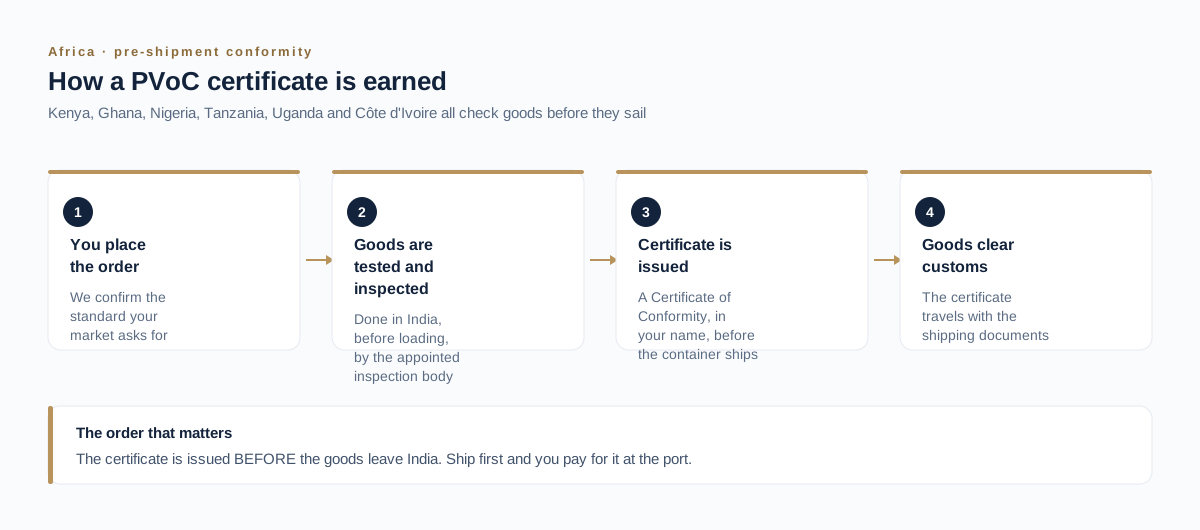
Kenya checks goods before they leave the country they were made in, not after they land. That one rule decides whether your container clears Mombasa in days or sits there for weeks.
What Kenya asks for
Kenya runs a PVoC scheme. Before a shipment leaves India it is inspected and tested against the Kenyan standard, and a Certificate of Conformity is issued by an inspection body appointed by KEBS. The certificate travels with the shipping papers. Goods that arrive without one face a destination inspection and a penalty.
| What the scheme is called | PVoC (Pre-Export Verification of Conformity) |
|---|---|
| Who runs it | Kenya Bureau of Standards (KEBS) |
| What you receive | A Certificate of Conformity (CoC) |
| When it is issued | Before the goods are loaded, in India |
| Main port | Mombasa |
Inspection and testing happen before loading. If nobody books it, the container waits. We treat it as a step in the order, not an afterthought.
Kenya names the standard your product is judged against. A product that passes a European test may still need evidence mapped to the Kenyan requirement.
A CoC covers that shipment. A repeat order needs its own certificate.
Tell us what you need for Kenya or see every market we ship to.
AfricaKenya · Ghana · Nigeria · Tanzania · Uganda · Côte d'Ivoire · South Africa · Africa
Europe and the UKUnited Kingdom · Germany · Netherlands · Belgium · Poland · Ireland · Europe
AmericasUnited States · Americas
SIMFY FIRESYS
What A2-s1,d0 actually means. The EN 13501-1 classes A1 to F, the smoke and droplet codes, the fl and L subscripts, and how to check a…
SIMFY FIRESYS
Sourcing fire dampers? Why EN 1366-2 is a test method and EN 15650 the product standard, what ve, ho and S mean, and what the enquiry…
SIMFY SMART UTILITIES
Buying STS prepaid meters for an estate or utility? What the TID rollover did, why the base date matters at order stage, and what to settle…

SIMFY AFROBUILD
Specifying architectural glass? Why toughened panes break on their own, what heat soaking really removes, and which EN product standard applies to each route.

SIMFY AFROBUILD
Choosing aluminium vs uPVC windows for a coastal or tropical project? What the air, water and wind classes really say, and which frame suits which opening.
SIMFY AFROBUILD
Sourcing fire rated doors? What EN 1634-1 tests, what E, I, W, Sa, S200 and C0-C5 mean, and why leaf, frame, seals and closer must be…

SIMFY FIRESYS
Buying intumescent coating for a steel frame? How section factor, critical temperature and EN 13381-8 tables decide thickness, and what to send before quoting.
SIMFY FIRESYS
Sourcing fire collars for a project? What EN 1366-3 really tests, why U/U and U/C decide whether your certificate applies, and what to check before ordering.

SIMFY FIRESYS
A firestop specification fails when it names a product instead of a performance. How to write the classification, evidence and substitution clauses properly.
SIMFY FIRESYS
Intumescent sealant swells under heat to close a gap. See how it differs from ablative and acrylic, and why its EI rating only holds in a…